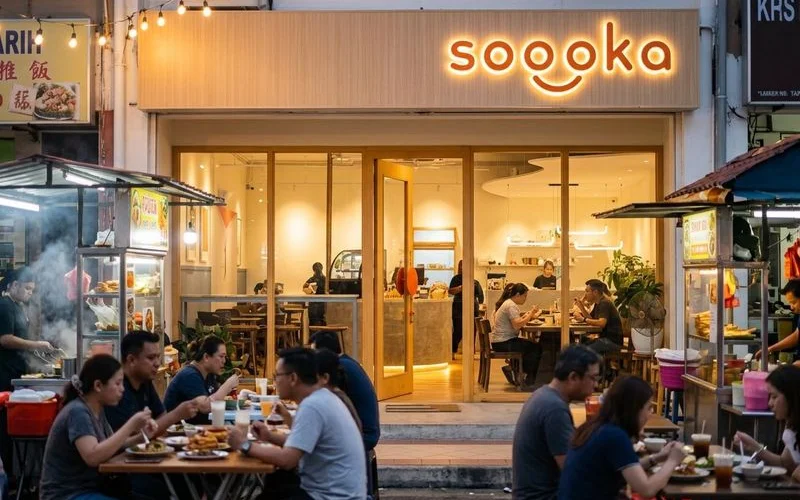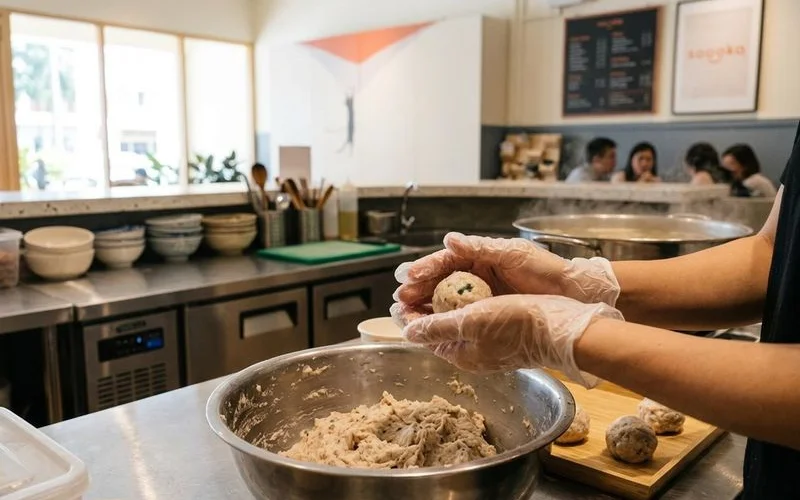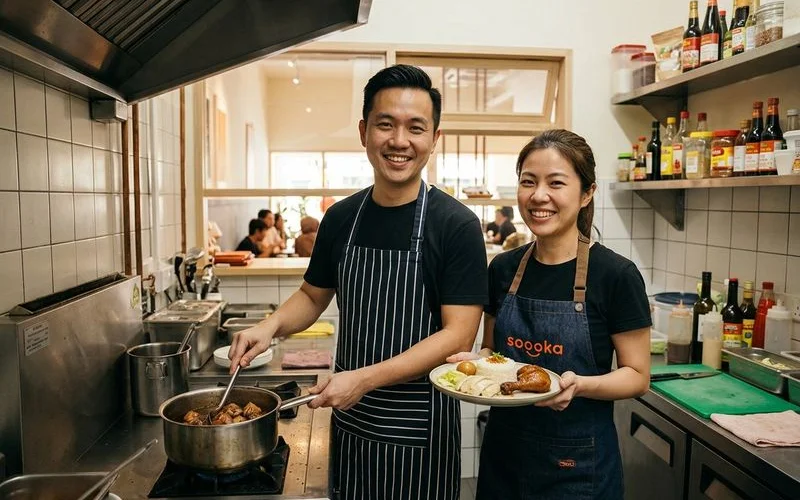
How We Make Our Braised Duck Flat White Noodles
A look behind the kitchen at how we slow-braise duck for hours in a Thai-Teochew herbal broth, resulting in the rich, soulful noodle dish our regulars love.
Francis & Esther
8 October 2025 · 6 min read
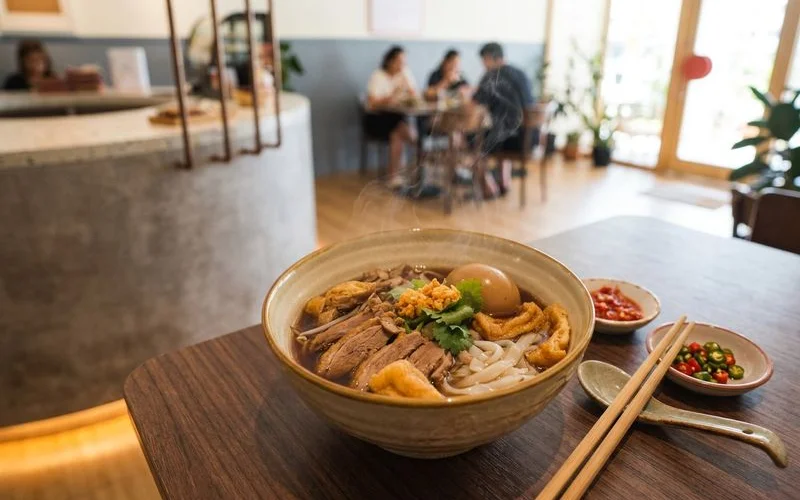
Of all the dishes on the Soooka Cafe menu, our braised duck flat white noodles might be the one that surprises people the most. They come in expecting cakoi — which is fair enough, since our signature cakoi is what many people know us for — and then they see a steaming bowl of rich, dark, aromatic duck broth arrive at the next table and everything changes.
You know that specific feeling when you discover a dish that tastes like a well-kept family secret? That is exactly the experience we wanted to capture here in Damansara Perdana. While most cafes chase the latest viral pastry trend, we realized something important. What our regulars were actually craving was the warmth and depth of a traditional home-cooked meal, but with the consistency of a professional kitchen.
This dish is the heart of our comfort bowls menu, and it is deeply personal to us. Let’s walk through the specific heritage behind the recipe, the science of our broth, and the exact assembly process that makes it work.
The Inspiration: Where Thai Meets Teochew
Our braised duck draws from a culinary tradition that lives at the intersection of Thai and Teochew Chinese cooking. In Thailand, particularly in the southern provinces and Bangkok’s Chinatown (Yaowarat), braised duck — or “Ped Pa Lo” — is a beloved street food. It shares DNA with the classic Teochew “Lor Ark,” but there are distinct differences in the flavor profile.
The Regional Distinction
Understanding these roots helps explain the unique taste of our bowl:
| Feature | Teochew Style (Lor Ark) | Thai Style (Ped Pa Lo) | Soooka’s Synthesis |
|---|---|---|---|
| Dominant Flavor | Salty, Savory, Herbal | Sweet, Peppery, Aromatic | Balanced Savory-Sweet |
| Key Aromatic | Old Ginger & Garlic | Galangal & Coriander Root | Galangal & Cinnamon |
| Soy Profile | Heavy Dark Soy focus | Light Soy & Palm Sugar | Premium Soy Blend |
Esther’s family connections to this tradition run deep. Growing up, she experienced both sides of this culinary heritage. Our recipe at Soooka is a synthesis of both, developed over months of testing until we achieved a broth that felt exactly right.
The Broth: The Science of the “Lor”
Everything starts with the broth, or what traditionalists call the “Lor” (Master Stock). We begin our preparation early each morning, building the braising liquid from scratch. The base is a combination of premium light soy sauce for salinity, thick caramel sauce (often used in KL’s best Hokkien mee) for colour, and rock sugar.
Rock sugar is non-negotiable here. Unlike granulated white sugar, crystallized rock sugar dissolves slower and provides a translucent, glossy sheen to the braising liquid without making it cloyingly sweet. We also add a generous pour of Chinese rice wine to deglaze the pot and lift the heavy savory notes.
Our Herbal Spice Blend
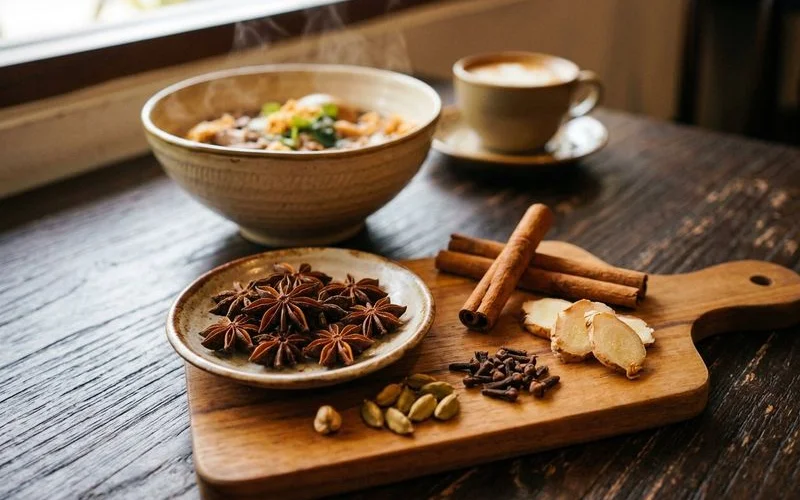
We use a carefully balanced mix of whole spices, each contributing a specific dimension to the final flavour. Before they touch the liquid, we toast them gently. This process, known as volatilization, releases the essential oils and aromatic compounds that raw spices simply cannot provide.
- Star anise: Provides a warm, liquorice-like sweetness that forms the backbone of the broth.
- Cinnamon bark: Adds a woody, gently warming quality (we use Cassia bark for a stronger punch).
- Cloves: Contribute a sharp, aromatic intensity.
- White peppercorns: Deliver a clean, direct heat that hits the back of the throat differently than chilli.
- Coriander seeds: Offer a subtle citrus note that lightens the heavier spices.
- Galangal: Our nod to the Thai side of the recipe — earthier and more peppery than regular ginger.
- Dried tangerine peel: A classic Teochew ingredient that adds a subtle, bitter-sweet citrus undertone.
The Duck: Choosing and Preparing
We use whole duck legs for our braised duck — thigh and drumstick together. Sourcing the right bird is critical in Malaysia’s poultry market. We look for ducks similar to the “Cherry Valley” breed, which offer a perfect meat-to-fat ratio.
Duck legs are ideal for braising because of their high collagen content. When cooked correctly, this tough connective tissue breaks down into gelatin, keeping the meat moist. Duck breast, which is lower in connective tissue and higher in myoglobin, tends to dry out and become chalky when braised for extended periods.
Before braising, we clean and trim the duck legs carefully. We remove excess fat pads but leave enough skin to contribute richness to the broth. The legs are then briefly blanched in boiling water for 2-3 minutes. This critical step removes impurities and coagulated proteins, ensuring the final broth remains dark and clear rather than murky.
The Slow Braise: Temperature Matters
This is where patience comes in. The prepared duck legs are submerged in the spiced braising liquid and cooked at a gentle, steady simmer for three to four hours. We do not rush this step.
The “Smiling” Simmer: We maintain the pot at approximately 90°C to 95°C. You want to see small bubbles barely breaking the surface—what chefs often call a “smiling” simmer.
If we let the pot hit a rolling boil (100°C), the muscle fibers would contract violently, squeezing out moisture and toughening the meat. A gentle simmer is what transforms tough collagen into silky gelatin. This usually happens once the internal temperature of the meat sustains at least 70°C (160°F) for a prolonged period.
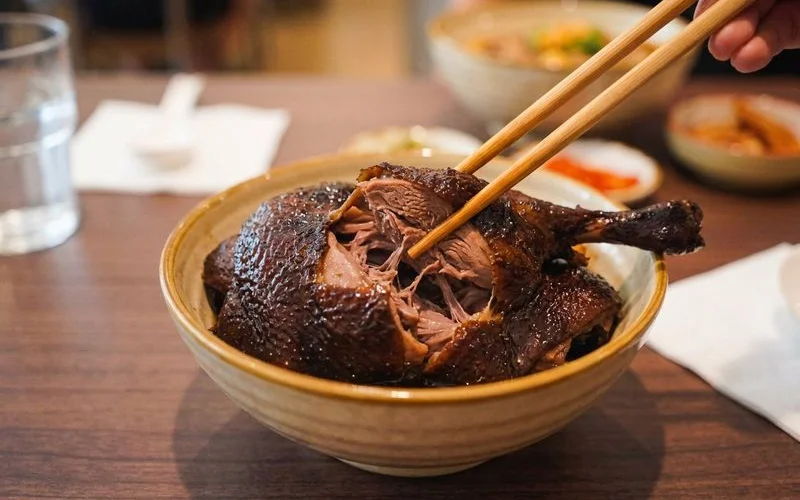
During the braising process, the kitchen fills with an aroma that is almost impossible to describe. It is warm, sweet, savoury, and herbal all at once. By the time the duck is finished, the meat is fall-off-the-bone tender. You can pull it apart with chopsticks. The braising liquid has reduced and concentrated into a rich, glossy sauce with an incredible depth of flavour.
The Noodles: Why Flat White
We serve our braised duck over flat white noodles — known locally as “kuey teow” or “hor fun.” We chose these noodles deliberately over yellow mee or bee hoon.
The Texture Advantage
There is a specific reason these noodles work best for this dish:
- Surface Area: The wide, flat shape provides maximum surface area for the viscous braising sauce to cling to.
- Texture: The smooth, slippery mouthfeel provides a gentle counterpoint to the fibrous, tender texture of the shredded duck.
- Neutrality: Rice noodles have a clean flavor profile that doesn’t compete with the complex herbal notes of the broth.
The noodles are cooked fresh to order. We blanch them briefly in boiling water until just tender, then toss them with a small amount of sesame oil to prevent sticking. They are laid in the bowl first, creating a bed for the duck and broth to rest upon.
Bringing It All Together
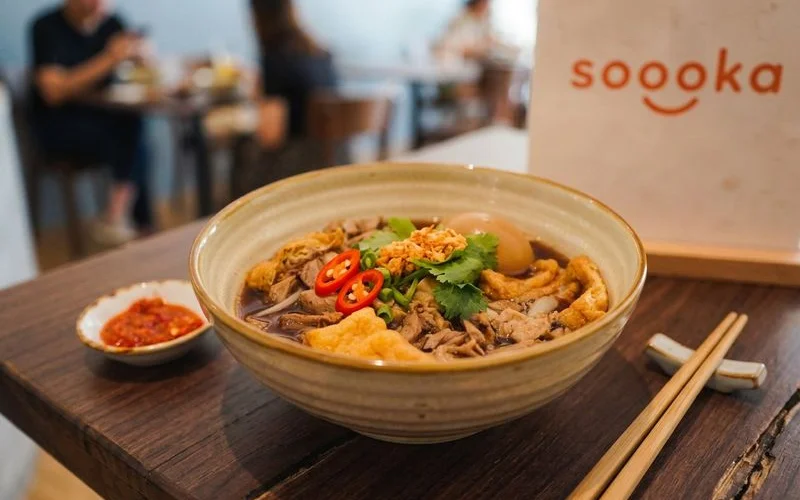
The final bowl is assembled with care. The noodles go in first, followed by generous portions of the braised duck — shredded and sliced so you get a mix of textures. A ladleful of the concentrated braising broth is poured over, immediately releasing a wave of fragrant steam.
We finish the bowl with a garnish of fresh coriander, sliced spring onions, and a small dish of our house chilli sauce on the side. The chilli sauce is entirely optional, but highly recommended. We make it with a blend of fresh chilies and vinegar to create a sharp acidity. This “sour punch” cuts through the richness of the duck fat, resetting your palate with every bite.
Insider Tip: The Kwang Qiang
Many of our regulars know to ask about our Kwang Qiang. This is a traditional Teochew fried beancurd roll stuffed with yam or turnip. While not always in the standard description, the crispy texture of the Kwang Qiang dipped into the savory braising sauce is a combination that true foodies in PJ absolutely love.
Why Our Regulars Keep Coming Back
We have customers who order this dish every single visit. When we ask them what keeps them coming back, the answer is almost always the same: “It tastes like someone’s grandmother made it.” That is perhaps the highest compliment we could receive.
This dish is not about technique for its own sake. It is about creating something that feels genuinely nourishing — food that warms you from the inside. That is what comfort food is meant to do, and it is the philosophy behind our entire comfort bowls menu.
Come Taste It Yourself
Our braised duck flat white noodles are available daily (except Wednesdays, when we are closed) from 10am to 10pm at our Malaysian fusion cafe. We are tucked away in the quieter part of Damansara Perdana, Petaling Jaya, offering a nice escape from the bustle.
Please note that we prepare the duck in limited batches to ensure quality. We do sometimes sell out during peak lunch hours, so if this is what you are coming for, arriving a bit earlier is a wise move.
Pair it with a cup of our cold-brew kopi for the full Soooka experience. We promise you will leave feeling properly looked after.
Explore More
View our comfort bowls menu →