Malaysian Fusion Food — The New Cafe Trend Redefining Local Dining
Malaysian fusion food blends heritage recipes with modern techniques. Explore why this trend is reshaping the local cafe scene and what to expect.
Francis & Esther
15 July 2025 · 7 min read
Something interesting is happening in Malaysian cafes right now.
Walk into the newer establishments in Petaling Jaya, Kuala Lumpur, or Penang, and you will notice a distinct shift. Menus that once revolved exclusively around Western brunch classics are changing. Avocado toast, eggs Benedict, and acai bowls are increasingly making room for dishes that draw from Malaysian culinary heritage but present them in entirely new ways.
You might see braised duck served on silky flat rice noodles.
Chefs are serving Cakoi with gourmet dipping sauces instead of plain congee.
Laksa is being deconstructed into components that would not look out of place in a fine-dining restaurant.
This is Malaysian fusion food. It is redefining what a cafe meal can be.
As the founders of Soooka Cafe—established in August 2023 by a husband and wife team—we have watched this trend develop with genuine excitement. Our name comes from the Malay word “suka,” meaning “to like,” and that sentiment drives everything we do.
It validates something we have always believed.
Malaysian food is sophisticated enough, flavourful enough, and interesting enough to stand at the centre of a modern dining experience. It does not need to be replaced by Western food to be “cafe-worthy.”
What Do We Mean by Malaysian Fusion?
The term “fusion food” has a complicated history.
In the 1990s and 2000s, it became something of a dirty word in food circles. People associated it with clumsy, gimmicky combinations that prioritised novelty over flavour. Asian-French “confusion” cuisine, sushi burritos, and curry pizza were fusion at its worst. These dishes combined things for the sake of combining them without any real understanding of the traditions being mixed.
Malaysian fusion, as we see it practised today, is fundamentally different.
It is not about forcing unrelated cuisines together.
This movement focuses on taking the flavour profiles, techniques, and ingredients that already exist within Malaysia’s extraordinarily diverse food culture and presenting them in modern contexts.
Malaysia is, in many ways, the original fusion food country.
Peranakan cuisine blends Chinese and Malay elements. Mamak food combines Indian and Malay traditions. Sarawakian laksa borrows from multiple ethnic groups.
The national palate has always been comfortable with the intersection of different food cultures. This is precisely why modern Malaysian fusion feels so natural. It is not inventing something new. It is extending a tradition that has existed for centuries.
The Forces Driving the Trend
Several factors have converged to make Malaysian fusion food the dominant trend in the local cafe scene.
A New Generation of Chefs
The current generation of Malaysian cafe owners and chefs grew up eating at hawker stalls and kopitiams. Many of them also trained in Western kitchens or studied overseas.
They returned home with technical skills in modern cooking methods. You will see sous vide, fermentation, and molecular techniques being applied to local ingredients.
But they also returned with a deep love for the flavours they grew up with. The natural result is food that uses contemporary techniques to elevate heritage recipes.
The Social Media Effect
Instagram, TikTok, and food blogs have created a visual food culture that rewards presentation as well as taste.
Traditional hawker food is delicious, but it is often served in functional packaging that does not photograph well.
Malaysian fusion cafes have found a way to present familiar flavours in visually compelling ways. Beautiful plating, curated tableware, and atmospheric interiors appeal to the social media generation without sacrificing authenticity.
Consumer Fatigue with Western Menus
After years of cafes competing to serve the best eggs Benedict or the most photogenic pancakes, many Malaysian diners have grown tired of Western-dominated cafe menus.
They want something that tastes like home but in a setting that feels modern and special. Malaysian fusion fills this gap perfectly.
National Pride in Local Food
There is a growing sense of pride in Malaysian food culture.
International recognition, such as the arrival of the Michelin Guide in Kuala Lumpur and Penang, has validated our local cuisine on a global stage.
A younger generation is increasingly interested in food heritage. Diners are seeking out cafes that celebrate local ingredients and traditions rather than importing foreign ones.
Comparing the Experience
We have broken down the key differences between the traditional cafe model and this new wave of fusion dining.
| Feature | Traditional Western Cafe | Modern Malaysian Fusion Cafe |
|---|---|---|
| Core Menu | Big Breakfast, Pasta, Burgers | Rice Bowls, Elevated Noodles, Local Snacks |
| Signature Drinks | Cappuccino, Latte, Mocha | Gula Melaka Latte, Pandan Cold Brew, Cham |
| Price Point | RM 25 - RM 45 per main | RM 18 - RM 35 per main |
| Atmosphere | Minimalist, Industrial, Melbourne-style | Warm, Nostalgic, Local Accents |
What Malaysian Fusion Looks Like in Practice
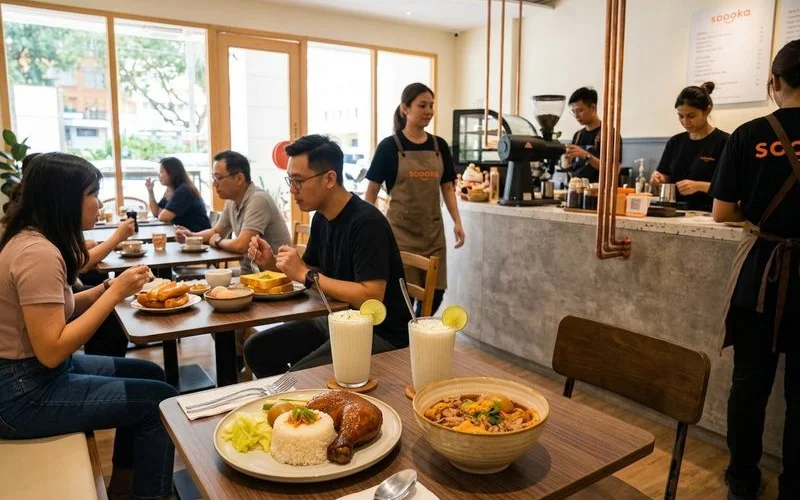
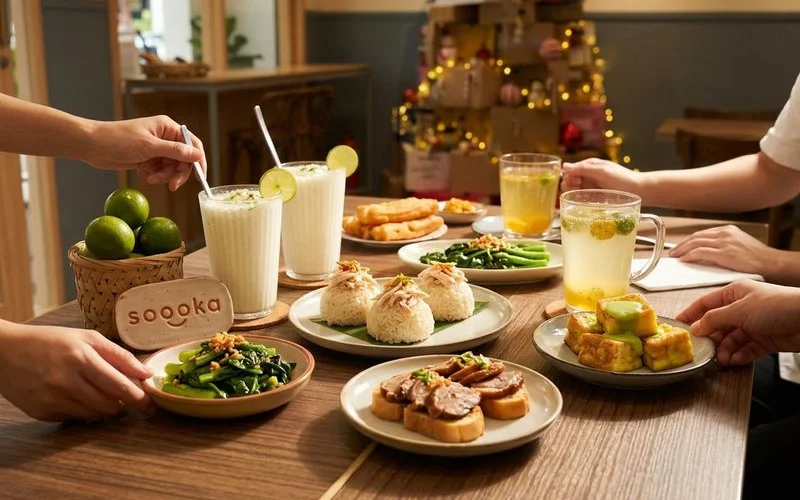
At Soooka Cafe, our entire menu is built around the principles of Malaysian fusion. Here are some examples of how this philosophy manifests in actual dishes.
Heritage Techniques, Modern Presentation
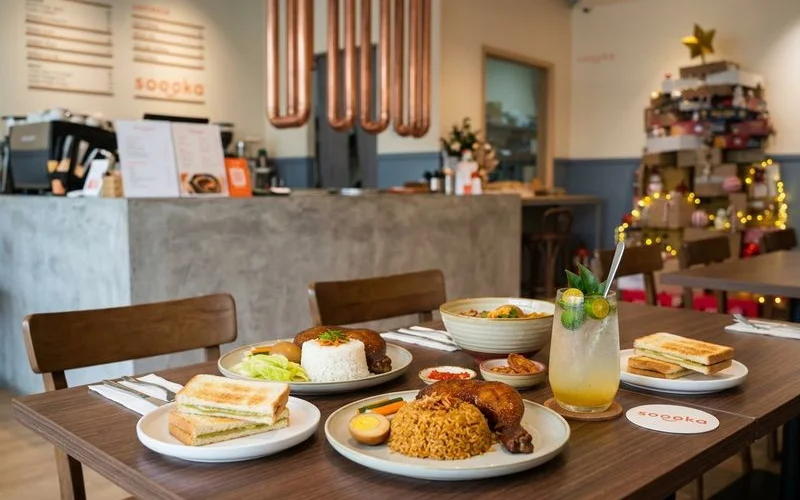
Our comfort bowls take traditional braising and soup-making techniques and present them as complete, balanced bowl meals.
These are the kinds of techniques that have been practised in Chinese-Malaysian kitchens for generations.
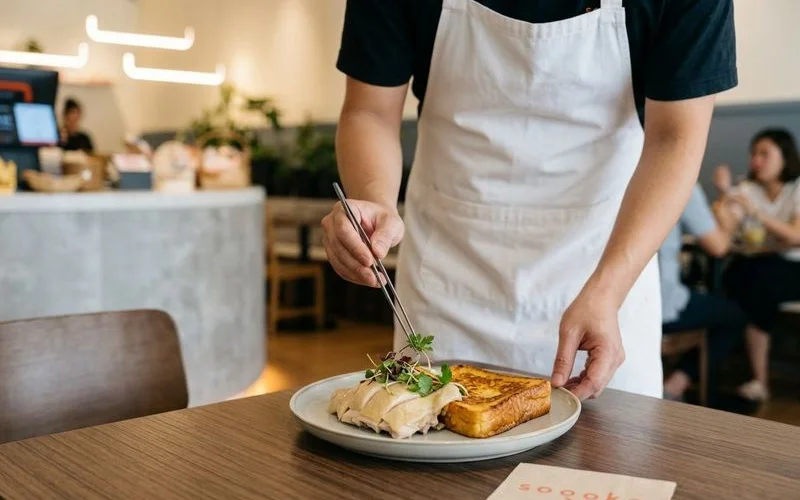
The braised duck noodles, for example, use a braising method rooted in Thai-Teochew tradition. We serve it over silky flat rice noodles with carefully composed garnishes that elevate the visual and textural experience.
Snacks Reimagined
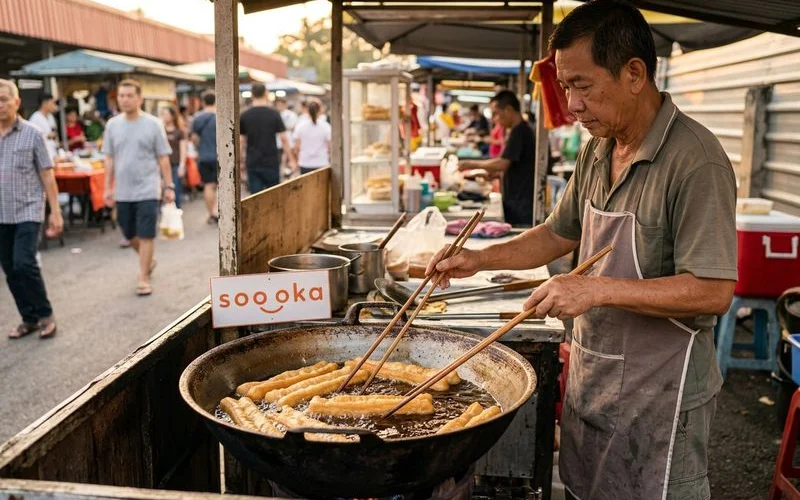
Our signature cakoi menu takes what is essentially a hawker breakfast staple and reimagines it as a premium cafe snack.
Most people know cakoi (youtiao) as a simple accompaniment to porridge.
We work with an artisan who has perfected cakoi over 25 years. By pairing the cakoi with thoughtful dipping sauces and creative fillings like chilli prawn, garlic butter, or cinnamon sugar, we transform a humble fried dough into something genuinely exciting.
Cross-Cultural Combinations That Make Sense
The key phrase here is “that make sense.”
We do not combine Malaysian flavours with random international ingredients for the sake of novelty. Every fusion element on our menu has a logical flavour connection.
Coconut ice cream with cakoi works because coconut and fried dough are a natural Malaysian pairing.
Five-spice in our braised dishes connects to the Chinese-Malaysian heritage of the recipe.
A Matcha latte on our drinks menu pairs with kaya cakoi because the earthy tea and sweet coconut egg jam are flavour complements.
The Challenges of Getting Fusion Right
Malaysian fusion is exciting, but it is not without its pitfalls.
As practitioners of this approach, we are keenly aware of the fine line between thoughtful fusion and disrespectful appropriation.
Respecting the Source Material
The most important principle is this: you must deeply understand the original dish before you attempt to reinterpret it.
If you are going to put cakoi on a cafe menu, you need to know how it has been made traditionally. You must understand why certain techniques exist and what makes a great version different from a mediocre one. Fusion without foundation is just gimmickry.
Avoiding the “Fancy for Fancy’s Sake” Trap
There is a temptation in fusion cooking to over-complicate things.
Some chefs add unnecessary elements or deconstruct dishes that were perfectly composed to begin with.
Others prioritise visual drama over eating pleasure. The best Malaysian fusion food resists this temptation. It adds modern touches only where they genuinely improve the dish, and it respects the wisdom embedded in traditional recipes.
Pricing Fairly
Fusion cafes can be more expensive than traditional hawker stalls.
This is sometimes justified by better ingredients, higher rent, and more labour-intensive preparation.
But the pricing must reflect genuine value. Charging premium prices for food that is no better than what you can get at a kopitiam, just because it is served on a prettier plate, is a fast track to losing customer trust.
The Future of Malaysian Fusion
We believe Malaysian fusion food is not a passing trend.
It is the natural evolution of a food culture that has always been about mixing, adapting, and reinventing.
As more talented chefs turn their attention to local ingredients and heritage recipes, the quality and creativity of Malaysian fusion will only increase.
The Rise of Hyper-Local Ingredients
The most exciting development we see on the horizon is the growing interest in hyper-local ingredients.
Young Malaysian chefs are exploring indigenous ingredients such as:
- Ulam: Wild herbs traditionally eaten raw.
- Buah Keluak: The intense, earthy black nut often found in Peranakan cooking.
- Bunga Kantan: Torch ginger flower, which adds a distinct floral punch.
Finding ways to incorporate these into modern cafe dishes represents a deeper level of fusion. It is not just blending different cultural traditions but connecting contemporary cooking with the land itself.
At Soooka Cafe, we are proud to be part of this movement.
Every dish we serve is an expression of our belief that Malaysian food culture is rich enough, diverse enough, and delicious enough to stand at the centre of any dining experience. This applies to everything from a casual weekday lunch to a special weekend gathering.
Visit our fusion cafe in Petaling Jaya in Damansara Perdana, and taste what Malaysian fusion food can be.
We are open daily except Wednesdays, from 10am to 10pm (8am on weekends).
The future of Malaysian dining is here, and it tastes like home. It is just a little different.