Nyonya Pie Tee — The Peranakan Classic You Should Be Eating
Learn about the crispy top-hat cup snack that has been a Peranakan favourite for generations, and how Soooka Cafe puts their own twist on it.
Francis & Esther
20 October 2025 · 6 min read
You know the feeling when you bite into something that is messy, loud, and absolutely perfect. That is the experience of eating Nyonya pie tee.
Most people know the heavy hitters of Malaysian cuisine like nasi lemak or laksa.
But this crispy “top hat” pastry filled with savoury vegetables often flies under the radar.
It offers a texture combination that few other snacks can match.
At Soooka Cafe, we have seen customers hesitate before ordering it, unsure of what to expect.
Those same customers usually end up ordering a second round.
We have included our own version on our snacks and sides menu to bring this heritage dish to a modern setting.
Let’s look at why this Peranakan classic is technically impressive, historically fascinating, and worth every calorie.
What Exactly Is Pie Tee?
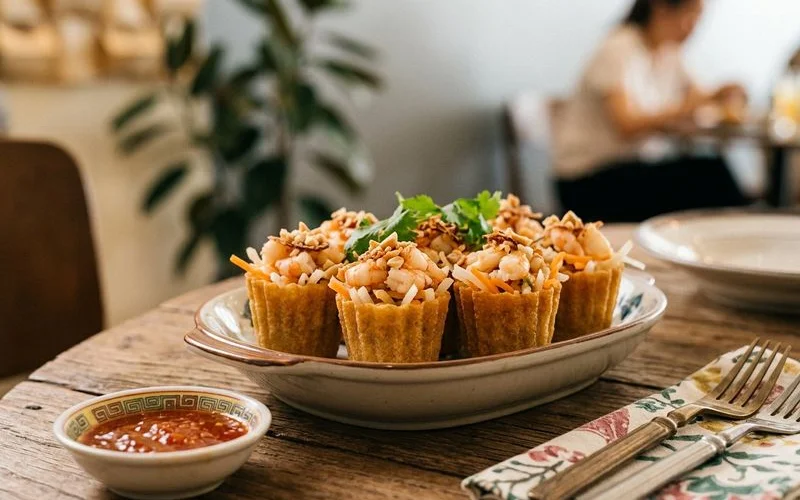
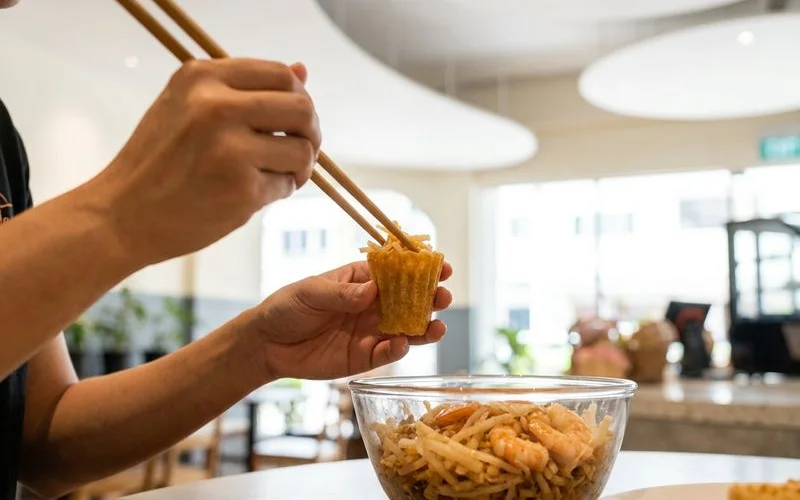
Pie tee (sometimes spelled “pai ti”) is a traditional Peranakan snack that functions as a self-contained salad cup.
The vessel is a thin, deep-fried pastry shell shaped like a small top hat.
Inside this shell sits a warm mixture of shredded jicama (known locally as sengkuang), carrots, and omelette strips.
The magic lies in the specific hardware used to make it.
Cooks use a specialized brass or copper mould attached to a long wooden handle to create the shells.
Brass is essential here because it retains high heat (around 170°C) better than aluminium.
This thermal mass allows the batter to crisp up instantly upon contact with the hot oil.
The filling, often called ju hu char in Hokkien, is where the flavour lives.
It is a slow-cooked stew of shredded vegetables seasoned with soy sauce and dried shrimp.
We top the mixture with fresh prawns, coriander, and a dollop of spicy chilli sauce.
You get a shatteringly crisp shell and a juicy, savoury filling in one bite.
The Peranakan Heritage
To understand pie tee, you need to look at the unique history of the Straits Settlements.
The Peranakan (or Baba-Nyonya) culture emerged from Chinese immigrants who settled in the Malay archipelago as early as the 15th century.
They married local women and created a fusion lifestyle that blended Chinese customs with Malay language and ingredients.
Food historians often point to a potential European influence in pie tee specifically.
The shape of the pastry closely resembles British “patty cases” or the Swedish struva (rosette cookies).
It is highly likely that Peranakan cooks adapted these European pastry techniques using local ingredients like rice flour and coconut milk.
This dish represents a three-way cultural intersection:
- Chinese: Stir-fry techniques and soy sauce seasoning.
- Malay: Local produce like yam bean (sengkuang) and chili pastes.
- European: The concept of a pastry shell container.
Pie Tee vs. Popiah: A distinct difference
Many people confuse the filling of pie tee with popiah.
While they share the core ingredient of stewed jicama, the eating experience is polar opposite.
Here is a quick breakdown of how they differ:
| Feature | Pie Tee | Popiah |
|---|---|---|
| Outer Layer | Deep-fried rice & wheat flour shell | Soft, thin wheat crepe skin |
| Texture | Crunchy, brittle, light | Soft, chewy, dense |
| Temperature | Shell is cool/room temp, filling is warm | Served warm or room temperature |
| Best For | A textural appetizer or snack | A filling meal replacement |
How We Serve Pie Tee at Soooka
We take the “freshness” mandate very seriously with this dish.
The biggest enemy of a good pie tee is moisture.
If you let the juicy jicama stew sit in the crispy shell for more than five minutes, the bottom will disintegrate.
Our kitchen prepares the shells daily in small batches to ensure they remain airtight and crisp until service.
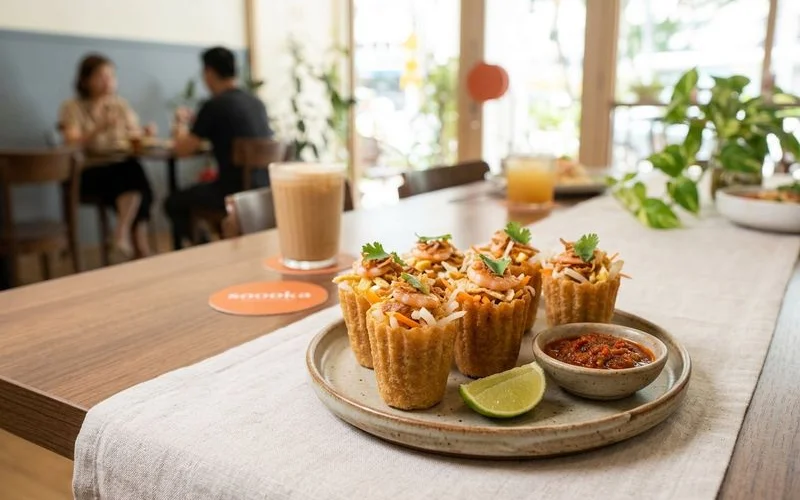
We serve our pie tee as a highlight of our snacks and sides menu.
You will receive the shells plated with the filling already inside, but we move fast to get it to your table.
Each order comes with our house-made sambal and fresh calamansi limes.
The acid from the lime cuts through the fried pastry’s richness perfectly.
You should squeeze the lime over the cup just seconds before you eat it.
Timing is everything in our preparation.
We never pre-fill the shells.
This ensures that when you take a bite, you hear that distinct crunch before tasting the savoury stew.
Why Pie Tee Deserves More Recognition
Pie tee is arguably more technically demanding than satay or nasi lemak.
Yet, it remains a rarity outside of specialty heritage restaurants in Melaka or Penang.
Making the shells is a labor-intensive process that cannot be easily automated.
A cook must dip the hot mould into batter, fry it, release the shell, and repeat the process one by one.
Commercial, mass-produced shells exist, but they often lack the delicate thinness of the handmade version.
This high barrier to entry keeps pie tee from becoming a ubiquitous street food.
We believe this scarcity makes it even more special.
Serving this dish is our way of keeping a specific culinary art form alive in Petaling Jaya.
It connects our modern cafe environment back to the communal dining traditions of the past.
Pairing Suggestions
Pie tee is a robust snack that needs a drink capable of cleansing the palate.
The fried shell and savoury jicama can be rich.
We recommend pairing it with beverages that have some acidity or bitterness:
- Iced teh tarik: The tannins in the tea balance the oil of the pastry shell.
- Cold-brew kopi: Black coffee cuts through the savoury sweetness of the turnip.
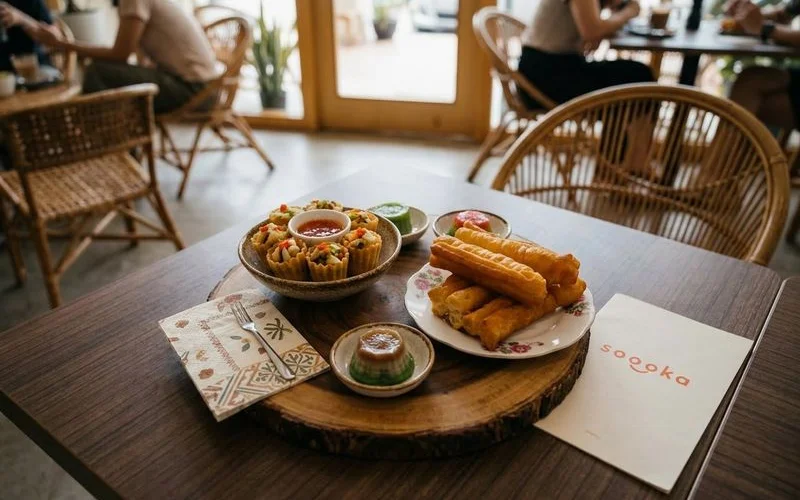
- Garlic cakoi or yam rolls: You can create a full platter by adding other items from our snacks and sides menu.
You don’t need to wait for a wedding or a trip to Melaka to try this.
Come visit our fusion cafe in Petaling Jaya, 11A-1, Jalan PJU 8/5a, Damansara Perdana.
We are open daily from 10am to 10pm (8am on weekends), though we take a break on Wednesdays.
Stop by and see why this little top hat is the best crunch in town.
Explore More
View our snacks sides menu →